Get 45% Off!
For Industrial Plant Managers | B2B Edition 2025
| 📌 Overview | This guide is designed specifically for Industrial Plant Managers who need to procure, evaluate, and manage Cable Tray systems at scale. Whether you are setting up a new plant, upgrading existing electrical infrastructure, or evaluating supplier contracts, this guide covers everything from types and materials to compliance standards and vendor evaluation frameworks. |
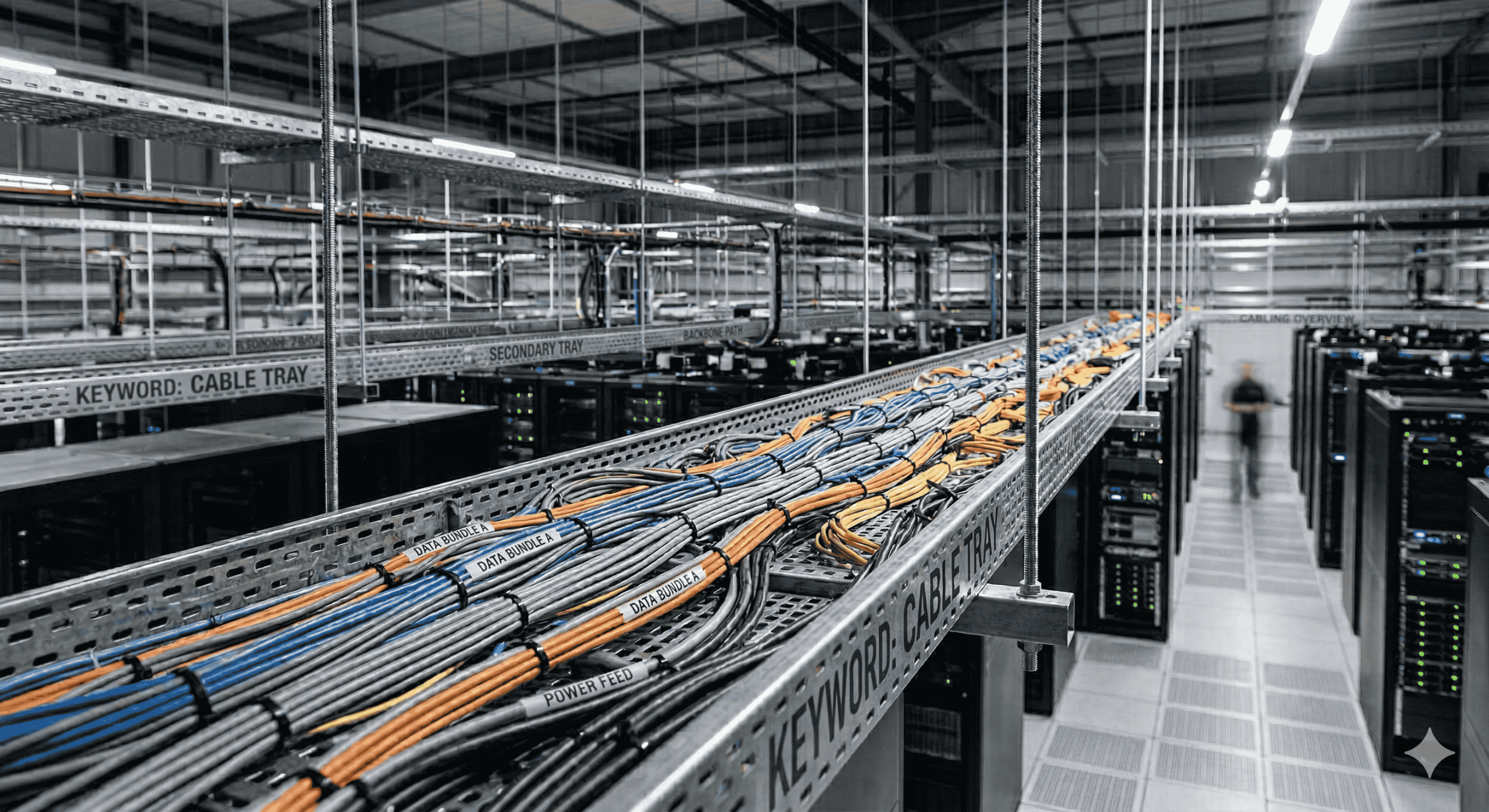
A Cable Tray is a structural support system used to route and manage electrical cables, power lines, and communication wiring in industrial, commercial, and infrastructure environments. Unlike rigid conduit systems, cable trays provide an open, accessible, and scalable cable management solution that is easy to inspect, maintain, and expand.
For industrial plant managers, cable trays are not just a passive infrastructure component — they are a critical safety system. Poorly selected or installed cable trays can lead to cable damage, fire hazards, production downtime, and regulatory non-compliance.
| 📊 Market Size | According to B2B industry research, the global cable tray market was valued at approximately USD 5 billion in 2022 and is projected to reach USD 9 billion by 2032, growing at a CAGR of 6.1%. Industrial expansion, renewable energy projects, and data center growth are the primary drivers. |
Selecting the correct cable tray type is one of the most critical decisions a plant manager makes. Each type is engineered for specific load, environmental, and cable density requirements. Here is a breakdown of the six main types:
| Type | Best For | Load Capacity | Ventilation | Common Use in Industry |
| Ladder Tray | Heavy power cables, long spans | High (up to 200 lbs/ft) | Excellent | Oil & Gas, Power Plants |
| Solid Bottom Tray | Sensitive cables, debris protection | Medium-High | Low | Pharma, Food Processing |
| Perforated Tray | Mixed cable runs | Medium | Good | Manufacturing, Refineries |
| Wire Mesh / Basket | Data, telecom, low voltage | Low-Medium | Maximum | Data Centers, IT Rooms |
| Channel / Single Rail | Small cable runs, light duty | Low | Moderate | Offices, Light Industry |
| Trough Tray | Outdoor, protection needed | Medium-High | Low-Medium | Utilities, Infrastructure |
For most heavy industrial applications — oil & gas, power generation, chemical plants, and steel mills — the Ladder Type Cable Tray is the preferred choice. Its open rung design provides maximum ventilation, reducing cable heat buildup and allowing for higher current ratings without derating.
Where cable protection from dust, moisture, and falling debris is critical, such as in pharmaceutical manufacturing or food processing plants the Solid Bottom Tray is the right choice. It provides physical protection but requires careful heat management planning.
Material selection directly determines the lifespan, maintenance cost, and safety performance of your cable tray system. Plant managers must evaluate material options based on environmental conditions, chemical exposure, and budget.
| Material | Corrosion Resistance | Weight | Best Environment | Relative Cost |
| Hot-Dip Galvanized (HDG) Steel | High | Heavy | General industrial, outdoor | Low-Medium |
| Stainless Steel (SS 304/316) | Excellent | Heavy | Chemical plants, marine, wet areas | High |
| Aluminum | Good (natural oxide layer) | Light | Indoor, light industrial | Medium |
| Fiberglass (FRP) | Excellent (chemical-proof) | Very Light | Chemical/corrosive environments | Medium-High |
| Pre-Galvanized Steel | Moderate | Medium | Indoor, dry environments | Hot-Dip Galvanised (HDG) Steel |
| 🏭 Plant Manager Tip | For outdoor installations or coastal industrial zones, always specify hot-dip galvanised (HDG) steel or stainless steel. Standard pre-galvanised trays in harsh environments can fail within 5–8 years, leading to costly replacements and safety hazards. HDG cable trays can last 30–40 years when properly installed. |
Hot-Dip Galvanised (HDG) steel is the most widely used material in industrial cable trays due to its balance of durability and cost. The hot-dipping process involves immersing steel in molten zinc, creating a thick, bonded protective layer that resists rust, oxidation, and environmental degradation.
However, in environments with direct chemical exposure — such as chlorine, acids, or saltwater — stainless steel (particularly SS 316) is the recommended upgrade. While the initial cost is higher, stainless steel eliminates corrosion-related replacements and maintains structural integrity in the most demanding conditions.
Not all cable tray manufacturers are equal. For industrial procurement at scale, selecting the wrong supplier can lead to product failures, project delays, and compliance violations. Use this structured evaluation framework when shortlisting manufacturers:
Before entering any discussion with a manufacturer, verify that they hold the following industry certifications:
| ⚠️ Warning | Manufacturers who cannot provide traceable certifications or third-party test reports for their products should be disqualified immediately. Inferior quality cable trays are associated with hidden long-term costs that vastly exceed initial price savings. |
Before finalizing a supplier, assess their manufacturing capabilities through these key criteria:
| Assessment Area | What to Verify | Red Flags |
| Raw Material Sourcing | In-process inspection, final product testing, and zinc layer measurement | No material traceability documentation |
| Production Capacity | Monthly output, lead times, MTO capability | Cannot commit to delivery schedules |
| Custom Fabrication | Ability to produce non-standard sizes, special configurations | Certified steel/aluminium suppliers, material test reports |
| Quality Control | In-process inspection, final product testing, zinc layer measurement | No documented QC procedures |
| Surface Treatment | HDG bath temperature, zinc coating thickness (min 65 microns) | Coating thickness below standard |
| Load Testing | NEMA VE 1 load test certificates for all claimed capacities | Certified steel/aluminium suppliers, material test reports |
Beyond product quality, evaluate the supplier as a long-term business partner:
When specifying cable trays for an industrial plant project, plant managers must evaluate multiple technical and operational factors simultaneously. Use this checklist as your procurement guide:
The first step is a thorough environmental assessment of your installation zone:
Undersized cable trays are a leading cause of electrical system failures in industrial plants. Follow these guidelines:
| 📐 Engineering Rule | A common mistake is ignoring load limits. Cable trays come with specific capacity ratings — for example, 100 lbs/ft for a ladder tray. Overloading beyond rated capacity causes sagging, structural failure, and potential cable damage. Always adhere to manufacturer-rated capacities with an appropriate safety factor. |
Industrial plant cable tray installations must comply with applicable national and international standards. Key regulatory frameworks include:
Plant managers often focus on the initial purchase price when evaluating cable tray suppliers. However, the total cost of ownership over a 20–30 year asset life provides a far more accurate picture for B2B procurement decisions.
| Cost Factor | Low-Quality Supplier | Premium Supplier | TCO Difference |
| Initial Purchase Price | Lower (−20 to −30%) | Higher baseline | Premium saves long-term |
| Replacement Frequency | Every 5–10 years | 20–40 year lifespan | 3–4x more replacements |
| Maintenance Costs | High (frequent inspection, repair) | Low (minimal intervention) | Significant savings |
| Downtime Risk | High (product failures) | Low (reliable performance) | Production loss costs |
| Compliance Penalties | High risk of violations | Full compliance assured | Avoid regulatory fines |
| Installation Labor | Higher (poor fit/finish) | Lower (precision engineering) | Faster installation |
Research consistently shows that inferior quality cable trays generate hidden costs that vastly exceed the initial price savings. A plant manager who selects a supplier based purely on unit price without evaluating quality standards, material specifications, and TCO is making a false economy decision that can result in safety incidents, unplanned downtime, and costly regulatory penalties.
If your industrial operations span multiple geographies, understanding regional cable tray standards is critical for compliance. Here is a brief overview of key regional requirements:
| Region | Primary Standard | Key Requirements |
| United States | NEC Article 392 (NFPA 70), NEMA VE 1 | UL Listing, load ratings, NEC installation rules |
| European Union | IEC 61537, CE Marking | UL Listing, load ratings, and NEC installation rules |
| United Kingdom | BS EN 61537, IET Wiring Regs (BS 7671) | CE/UKCA marking, earthing continuity |
| Middle East | IEC-based, Saudi SBC, local authority requirements | Mechanical strength, corrosion, and electrical continuity tests |
| India | BIS IS 14927, Indian Electricity Rules | Material thickness, earthing, cable separation rules |
| China | GB 50054, CCC Certification | UL Listing, load ratings, and NEC installation rules |
| 🌍 Global Procurement Tip | When sourcing cable trays for multi-country industrial projects, require suppliers to provide documentation confirming compliance with BOTH the IEC 61537 international standard AND the specific national standard applicable to each installation country. This dual-compliance approach minimizes re-specification risk and avoids costly project delays. |
Use this Request for Quotation (RFQ) checklist when approaching cable tray manufacturers and suppliers:
Even the highest quality cable trays will underperform if installed incorrectly. Plant managers should ensure their installation teams follow these industry best practices:
10. Top Cable Tray Manufacturers — Global B2B Overview
While no endorsement is implied, the following manufacturers are widely recognised in global B2B industrial markets for their cable tray products, certifications, and supply capabilities:
| Manufacturer | Headquarters | Known For | Certifications |
| Legrand | France / USA | Comprehensive cable management, global distribution | UL, CE, IEC, NEMA |
| Eaton (Cope/Cooper) | USA | Heavy industrial cable tray, North American standard | UL, NEMA VE 1, NEC |
| Schneider Electric | France | Innovation, sustainability focus, global reach | IEC, CE, UL, ISO |
| Atkore (Cope) | USA | First modular cable tray system (1948), full range | NEMA, UL, NEC |
| Southwire | USA | Wire & cable + cable tray, vertical integration | UL, NEMA, ISO |
| Panduit | USA | Cable organisation, data centre focus | UL, IEC, NEMA |
| Schiavetti (Spina Group) | Italy | Stainless steel, industrial/energy sector | Cable organisation, data centre focus |
| 💡 Note | The best manufacturer for your plant is not necessarily the largest global brand. Local or regional manufacturers with the right certifications, strong after-sales support, and experience in your specific industry sector often provide better total value for industrial procurement. |
Based on industry experience and procurement best practices, here are the most costly mistakes plant managers make when specifying and purchasing cable trays:
The initial unit price of a cable tray represents only a fraction of its total lifecycle cost. Suppliers who cut corners on zinc coating thickness, steel quality, or surface treatment deliver products that fail prematurely — leading to emergency replacements, production downtime, and potential safety incidents.
Overloading cable trays beyond their rated capacity causes structural sagging and potential collapse. Always calculate total cable weight plus a 25–30% safety margin, and verify support spacing against the manufacturer’s deflection tables.
Using standard galvanised steel trays in chemical, coastal, or high-humidity environments leads to accelerated corrosion and premature failure. Match material specification to the actual operating environment — stainless steel or FRP, where chemical resistance is required.
Many plants undersize their cable trays at the design stage, leaving no capacity for future cable additions. Always plan for at least 20% additional capacity to avoid costly tray replacement when plant capacity is expanded.
Failing to comply with applicable NEC, IEC, or ATEX standards can result in failed inspections, insurance complications, regulatory penalties, and catastrophic liability in the event of a fire or electrical incident. Always specify compliance requirements upfront in your RFQ documentation.
For industrial plant managers, cable tray procurement is a strategic decision not a commodity purchase. The right cable tray system, sourced from the right manufacturer, ensures the safety of your electrical infrastructure, protects your cables for decades, and supports plant operations without unplanned downtime.
The key to successful cable tray procurement is a structured, systematic approach: define your technical requirements precisely, evaluate suppliers against verified certifications and manufacturing capabilities, plan for total cost of ownership rather than unit price, and ensure your installation team follows international best practices.
| ✅ Final Checklist | Before finalizing your cable tray order: (1) Confirm tray type, material, and dimensions match your environmental and load requirements. (2) Verify supplier certifications — NEMA VE 1, IEC 61537, UL, and ISO 9001 minimum. (3) Request material test certificates and third-party load test reports. (4) Get at least 3 supplier references from comparable industrial projects. (5) Calculate Total Cost of Ownership, not just unit price. (6) Confirm accessories and spare parts availability for long-term maintenance. (7) Review compliance with all applicable national and international standards for your installation zones. |
Need expert guidance on Cable Tray specification for your industrial plant?
Contact our technical team for a customised solution tailored to your facility requirements.
This website use Cookies to help you have a superior and more admissible browsing experience on the website.